Fred and Loathing on The Internet
Welcome to the public web log of Fred Lambuth
Popular Tracks from 2026-01-25
Pentagon Fan Fiction
2026-Jan-25
Were there a Real-Time-Strategy game centered around the war in Vietnam (the 1960s span of it), I would imagine that the soundtrack would make use of the US pop/rock hits of that same era. You know… Vietnam War music. CCR (with overemphasis on Fortunate Son). Motown girls singing in harmony. Folk adjacent California hippie rock messing around with electric guitar noises. The main menu, pause menu, intro all seem ripe for the use of license 60’s rock’n’roll sounds. Or some facsimile if those can’t be had.
The only Vietnam era themed game I can think of (Battlefield Bad Company 2’s DLC), draped the game’s user interface with twangy Creedence sounds. The game was basically the same game as Bad Company 2, just with Vietnam War flourishes. It was still a multiplayer first person shooter of automatic rifles, grenades, tanks, and close air support, despite being set almost fifty years prior to the regular Bad Company 2. I suppose the music can be enough to make the player feel like there’s more to it than just a paint swap of the regular Bad Company 2 set in the modern era of warfare.
Oh wait. I have planted a ‘Nam game. I played Rising Storm 2 over a free weekend on Steam! It was an online team shooter set in the Vietnam era! I do not think it had the budget for the song rights to rock/pop hits of the 60s and 70s. Those developers did not have EA Games type money to throw around. That game approached the authenticity of the war by making the game rules more ‘realistic’ than Battlefield. Kills were handed out in one or two bullet wounds. Visibility was terrible, so often the player would be shot by hard to detect enemies.
It was more realistic than Battlefield, no doubt about that. Reloading could not be done while running and jumping, for one. Yet it is still just a video game. Giving the game a longer learning curve is something that would make any video game simulation more ‘realistic’. Or I’ve been told Dark Souls is more realistic than other sword games because of the difficulty. There is some truth to be deciphered from that, but let's not do that now.
Despite that ‘realism’ that closer approximated the fighting in Vietnam, I don’t remember Rising Storm 2 as much as the glitzy but shallow Battlefield: Bad Company Vietnam. They are both fun games, each with their own merits. Yet I can remember moments in one game, but not the other. Half of those memorable moments can be attributed to the music getting blasted by loudspeakers in the game. Whether it's psychedelic rock from the Hueys flying overhead, or the tinny recordings of NVA announcements on loudspeakers posted to stanchions. Those elements made it feel more like a Vietnam war movie.
However, that idea of what the sounds of Vietnam might be a Hollywood mirage. Were the actual soldiers at the time blasting the same stuff used in the Hollywood movies? Is the sound imbued into the war’s legacy a product of film producers arranging the soundtracks of Vietnam War movies? Media that is attached to the memory of the war, even though the actual people participating in it did not hear it that way?
If The Doors and Stones were blasted over loudspeakers “in-country” during the US conflict, it was definitely only sourced from some servicemen’s personal collection. A rare and exceptional service member that sticks out from most GIs. The cool music of the 1960s that was retroactively assigned as Vietnam War music was not as big of a contemporary hit as the Forrest Gump soundtrack would have you believe. And that’s what the grunts listen to: whatever is at the top of the charts. Whatever the girls are dancing to.
Were the typical service members in the late 1960s anything like the ones I knew in my time in the Navy in 2010s, they would not be listening to flamboyant rock musicians. Not by choice. Maybe the draftees would dig that scene. Had you assigned songs to movies about the military based on what Private/Seaman/Airman Schmuckatelli would actually be listening to, I would guess Vietnam War music would have much more country-western material.
The rest of the songs on a realistic Vietnam War movie soundtrack would just be whatever was the top 10 of any year in the late 60s. Like the title theme from To Sir With Love, a movie version of a Broadway musical. It was the #1 song in the US charts for 1967! The music that Robin William’s character in Good Morning Vietnam called boring is what I imagine was the most common music found throughout the US’s involvement in that war. Calming instrumental numbers or maybe Frank Sinatra crooning when they want to be a little daring.
I’m not here to talk about a game set back in ‘Nam in the 60s. The war, and its accompanying soundtrack I have in mind is a hypothetical war. The opening skirmish in the heating up of The Cold War. Right before the USSR collapsed. When both NATO and the Warsaw Pact countries had armies trained on one another with equipment that had never been actually used for their expressed purposes.
The game in question is called Warno. From some development team called Eugen. Apparently they’re veterans of the war-sim video game trade. Warno game brings with it conventions from previous games, set in other armed conflicts. This is the first I have heard of Eugen, or their games, and their intricate rules for deciding which team makes better “bomb go boom” decisions.
Realistic military simulation games are not strangers to me. I am definitely not the type to spend more than a passing fancy into that sort of stuff, but even that ‘passing fancy’ level of engagement is required for war sims on the PC. To have any fun requires a lot of knowledge and commitment. This game is no different, or possibly on the lighter side of military sims? More of a very intricate RTS?
All that crap earlier about how to choose the right Vietnam War music for authenticity in an RTS set in that time was a rhetorical device to help come up with the idea of what would be the authentic music to accompany the hypothetical war the US leadership (and the defense industry) planned to fight against the Soviets? Were you to use the sounds of what US military members were likely listening to in 1989 for your game, that music can be discovered by looking at the pop charts for that year, with a slight country skew. So Bobby Brown, Milli Vanilli, and .38 Special. Knowing these are likely choices, I can understand why Hollywood producers would want to inject something inauthentic into an artistic product about a bygone war.
Warno, with the summer of 1989 being the flash point for the Cold War going hot across the European plains, pulled me right in with multimedia presentation. I needed persuasion to get bogged down into learning the ruleset of another ‘realistic’ RTS. Warno was presented to me in a nostalgic package that ushered me through learning the depths of a new warsim game. The intro felt like a very believable, of the time, news report of military conflicts happening throughout the globe at the end of the 1980s. I know this because those sorts of broadcasts are among my first memories! The graphic capabilities of a local newsteam bringing you VHS taped events into the warmth your humming CRT set at home. Que nostalgia!
Now the analog video of the recordings used in the intros seen from the lens of today betrays that this game is set in the past, despite the forward looking trappings of NATO’s computer guided way of war. The music has a throbbing retrowave beat that uses all the best elements of 80s music, handled expertly by a musician that is studied in the distant past of the 1980s. Or that’s how I interpret most any ___-wave genre of music. The 80s done better than the 80s. The 80s reproduced digitally by tiny silicon parts squeezed into one computer instead of a half dozen devices, each made for one purpose. The music matches the forward thrust of a new way of war. With humans on the edge of an inner robotic war as cold as spacey synthwave sounds.
The game itself does a standout job using the visual dictionary of the US military as the default user interface for most game menus. The easy to read font in white. The audio reports informing the player about developments in the match sound like the chatter of military comms. Weighing how ‘realistic’ the game is is not something I am equipped to handle. What is nerfed or overpowered compared to real life. What ranges are too much or too little for the actual guns mentioned in the very intricate unit readouts. The UI feels like command and control equipment for a NATO commander.
I have the feeling most any RTS given this setting paired with the packaging Eugen put together would have been a big winner in my book, no matter how the games mechanics are judged by experts. The hypothetical war the Soviets and NATO were built to fight is an underserved concept that now has become retrofuturism. (Coldwarpunk!) The military units being used in that theoretical fight were the cutting edge of the future I was promised when I was a child. The future that was to come to fruition in the far off year of 2000.
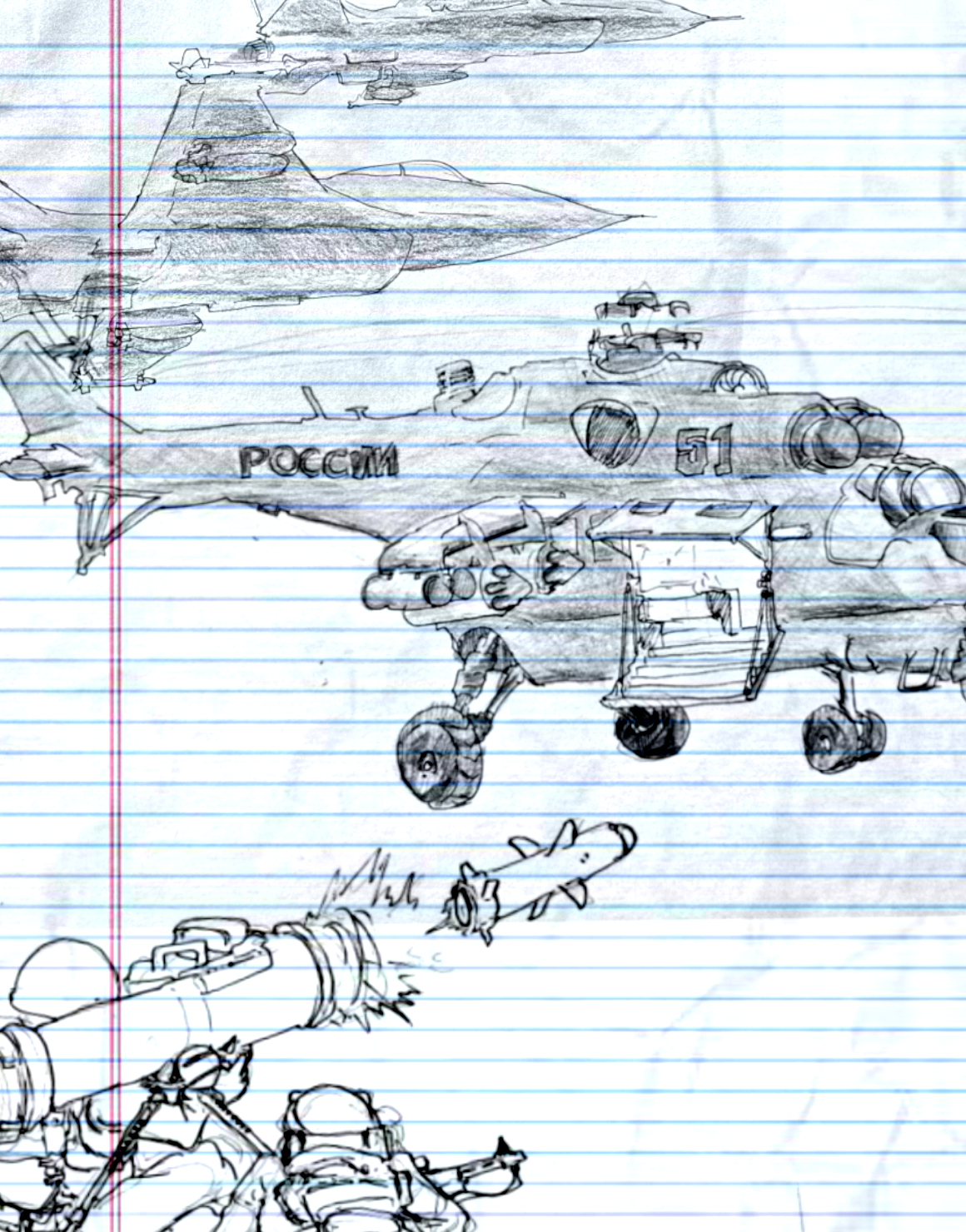
In the 1980s, the only people using lasers, satellites, stealth, supersonic speed, or any sci-fi stuff, all at the same time, was the US military, and its military allies. McDonnell Douglas, General Dynamics, Northrup-Grumman. I could go on and on with names of companies putting out heavy guns to penetrate Russia’s best armor. Missiles to damage heavy Russian attack helicopters. Missiles! Missiles! Missiles! They made so many different varieties of missiles! AA, AT, AP, SAM. The alphabet is a playground of specialized guidance systems.
Behind those missiles were the dawn of digital electronics. Missiles needed very sophisticated computing to get to their target. That is their greatest strength: getting to their target. Weapons that move around the environment even after being fired. Integrated circuits packed together could fit in a tank, or even an infantry fired weapon, that could handle those types of non-linear pathfinding. Tiny electronics could be bolted on to just about anything, and those electronics can provide the means to shoot missiles accurately.
Targeting before missiles could get by with analog electronic equipment. Rockets and ballistics on simple trajectories didn’t need a lot of computation, thus did not need a lot of semiconductor parsing up logic. That analog electronic past though is still the undergirding of that technically advanced army NATO had poised ready to fight the Reds. The US military was fielding the most advanced toys DARPA could come up with alongside reliable yet ancient transistorized electronics. This war was not all the way in the future. It still needed brute force and boots on the ground.
This hot Cold War in the 80s looked really cool in the picture books I had as a kid. Not some grandpa war with bolt action rifles with wooden stocks. Or slow moving propeller planes. Or painful atrocities involving civilians that bog down the action from the shooting. This was a war of the future, fought in neat orderly ranks, as according to the computer simulations. One where the war never goes nuclear, so that all the tanks, and all the helicopters, and all the artillery pieces, and whatnot can meet on an empty field of battle, exchange salvos, their projectiles only blow up the stuff they targeted, and then everybody who survives go home. What a splendid little game of toy soldiers. Warno put that gift together in one convenient package for me.
Add Comment
eddie_from_chicago
I had no idea which direction this was going. It was pleasing throughout and stuck a surprise landing.
2026-09-01 14:20:00.707568